Zero Trust Access
Pain Points
Pain Points
Multi-Type Resource Exposure, Continuous Expansion of Attack Surfaces
Enterprises possess not only Web apps but also APIs, databases, SSH/RDP hosts, K8s/API Servers, and cloud consoles. Traditionally, these are exposed via public IPs, leased lines, or VPNs, lacking a unified access control entry, leaving attack surfaces scattered and hard to converge.
Coarse-Grained Authorization in VPN Mode, Severe Lateral Risks
VPNs establish "network-level trust." Once inside the intranet, users can often move laterally across multiple systems and resources, violating the least privilege principle. Also, heavy client dependence results in poor user experiences, especially in mobile and external collaboration scenarios.
Lack of Identity-Based Governance for API and Data Access
System-to-system invocations heavily rely on static keys (Tokens/AK/SK/database passwords) and lack a unified identity system and dynamic authentication mechanism. Once credentials leak, core interfaces and data are directly subjected to abuse.
Lack of Unified Control for Cloud and Infrastructure Access
In multi-cloud/hybrid-cloud environments, access points for cloud consoles, hosts, and container platforms are scattered with complex permission models. The lack of unified policies and auditing makes cross-environment consistent security control difficult.
Fragmented Authentication and Access, Unable to Continuously Evaluate Risks
Traditional access control only authenticates once at login, lacking dynamic risk evaluation during the session (e.g., device changes, IP anomalies, behavioral anomalies), thus failing to achieve true continuous trust.
Solution Overview
No.1 Authenticate First, Access Later
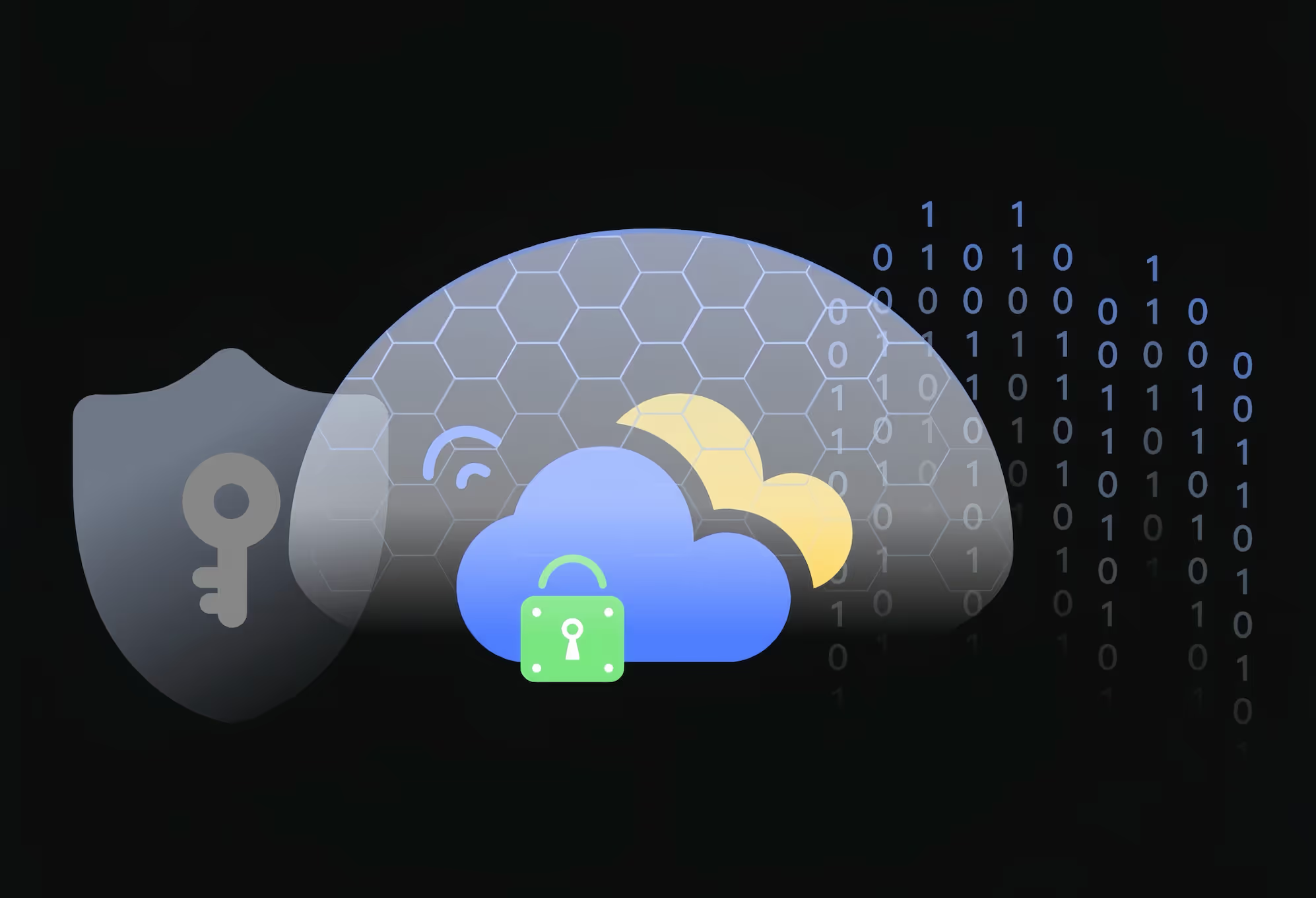
All resources are invisible by default. Users must pass IAM identity authentication before obtaining an access entry point.
No.2 Full Domain Coverage (Web / API / Data / Infra / Cloud)
A unified policy engine applies a consistent access control model across all types of resources.
No.3 Least Privilege + Fine-Grained Control
Permissions are precisely defined down to "User × Resource × Action × Condition," preventing any over-authorization.
No.4 Continuous Access Evaluation (CAEP)
Dynamically evaluates context-based risks during access, adjusting or interrupting access permissions in real time.
No.1 Authenticate First, Access Later
All resources are invisible by default. Users must pass IAM identity authentication before obtaining an access entry point.
No.2 Full Domain Coverage (Web / API / Data / Infra / Cloud)
A unified policy engine applies a consistent access control model across all types of resources.
No.3 Least Privilege + Fine-Grained Control
Permissions are precisely defined down to "User × Resource × Action × Condition," preventing any over-authorization.
Business Values
- Comprehensively Converge Attack Surfaces, Achieve Resource-Level Cloaking: All resources are hidden behind the Zero Trust access system. Attackers cannot directly probe Web, API, database, or host entry points, fundamentally reducing the probability of successful attacks.
- Upgrade from Network Boundary Security to Identity Boundary Security: No longer reliant on VPNs or intranet boundaries, access control centers on "Identity + Context," establishing a true Zero Trust architecture.
- Continuous Trust Evaluation, Dynamically Respond to Risks: Based on the CAEP mechanism, continuously evaluates user status, devices, locations, and behaviors during access. Any anomaly can trigger real-time secondary authentication or session interruption.
- Implement Least Privilege, Eliminate Lateral Movement Risks: Permissions are precisely restricted to specific resources and actions. Users can only access authorized objects, completely solving lateral movement issues inherent in VPN models.
- Clientless Experience, Reduce Usage and Operations Costs: No VPN or Agent installations are required; a browser accesses all resources. The unified portal and SSO drastically enhance user experience and lower IT support costs.
- Cover Human + Application Dual-Subject Identity Governance: Manages not only "humans accessing systems" but also "systems accessing systems" (API / Workload), realizing a complete enterprise-class identity security system.
- Unified Platform Management, Simplify Security Operations: IAM + Zero Trust access gateway + policy engine unify authentication, authorization, access, and auditing. The entire link is visible, controllable, and traceable, significantly reducing security operations complexity.
Related Products
Privileged Access Management

MFA & Passwordless
Related Case Studies
Ready to Embrace a Safe and Efficient Digital World?
Contact us and Let’s discuss how Paraview can secure your identity and API assets.